Custom ERP development
Off-the-shelf packages impose their own way of working, and your teams spend their days working around them with spreadsheets. We start from your real processes and build the software around them: your screens, your rules, your documents. You retain ownership of the source code and the database.
What you gain
- 0 per-seat licences
- 100 % of the source code delivered
- 1 system that follows your processes, not the reverse
In pictures
-
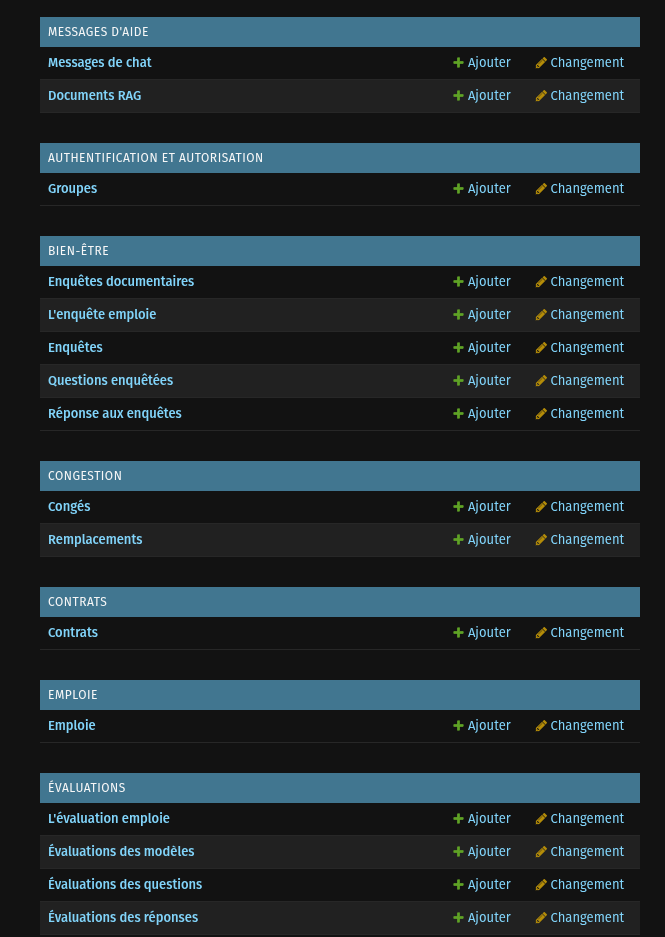
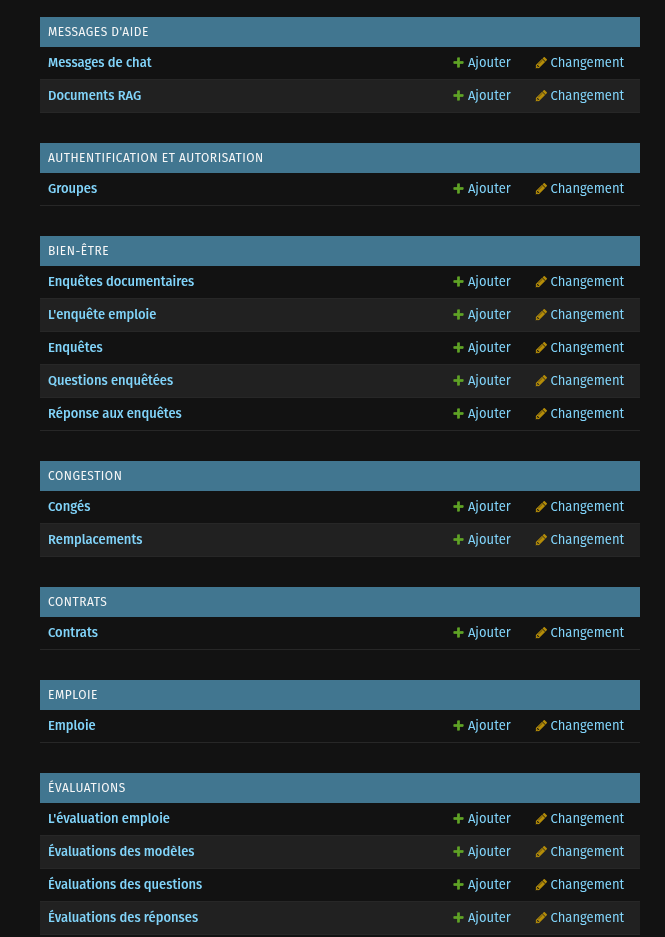
Scheduling, attendance, appointments, stock. -
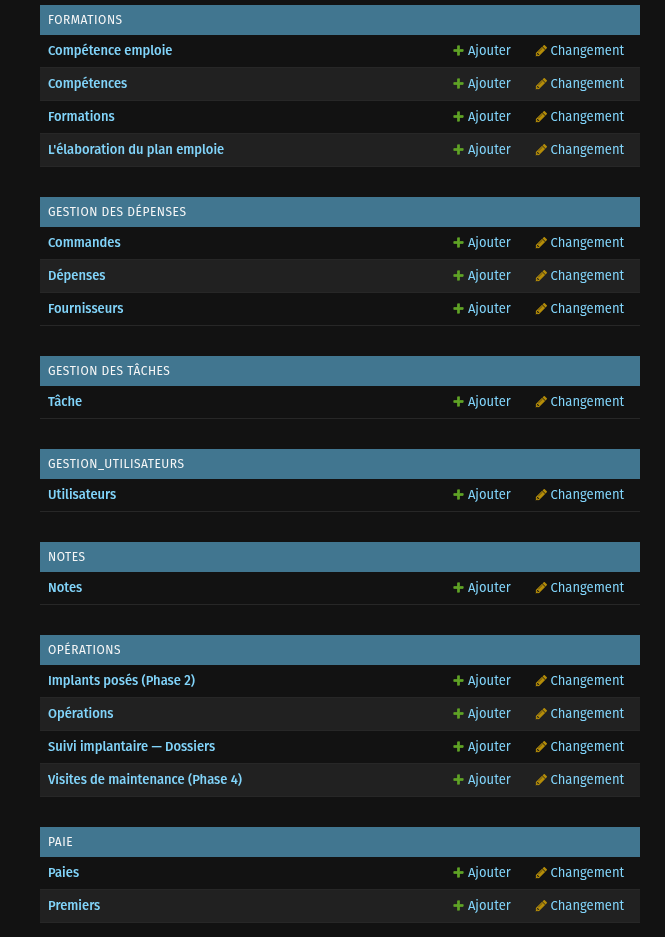
Training, expenses, tasks, payroll. -
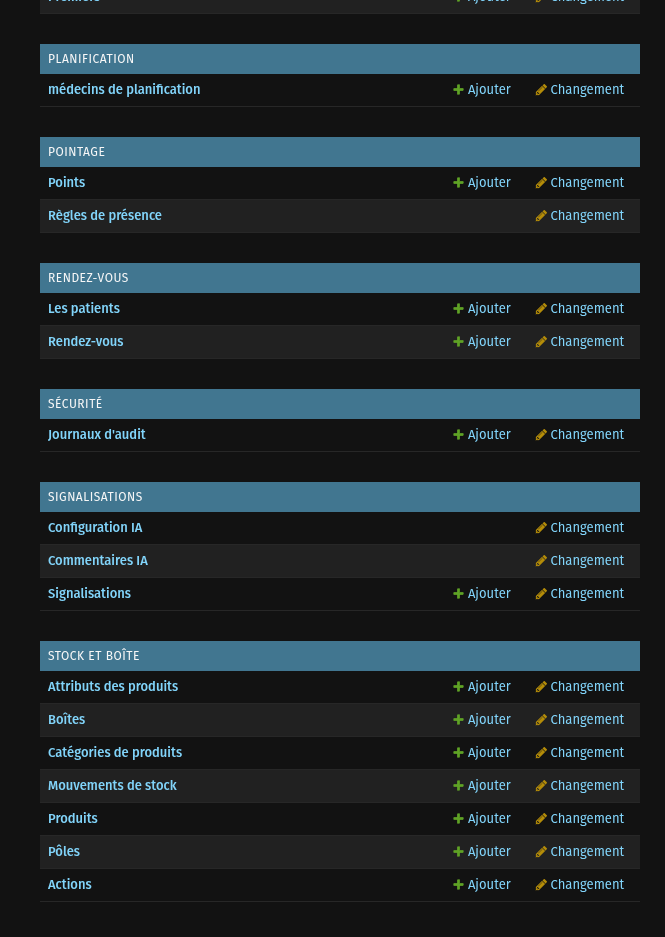
Indexed documents, leave, contracts, appraisals.
An off-the-shelf package sells you somebody else's processes. Yours never quite fits, so teams compensate with parallel spreadsheets — and reliable data ends up existing nowhere.
We take the problem from the other end. We observe how you actually work, write the scope, then build the software around your rules. You retain ownership of the result.
What the software includes
Written scope
<p>What the software will do, what it will not do, and how we will know that it works.</p>
Incremental delivery
<p>You see the software running on your own data before the end of the project.</p>
Migration of existing data
<p>Spreadsheets, exports and historical databases migrated with a consistency check.</p>
Mobile application
<p>Built in Flutter where the field requires it, on the same database.</p>
Operational interfaces
<p>Connection to the equipment and services already in place: time clocks, scanners, mail.</p>
Skills transfer
<p>Your teams are trained to administer the software day to day.</p>
The embedded AI
TaskNova
Dictate the instruction, and it becomes an assigned task with a deadline.
BatiNova
Site progress, payment applications and final accounts kept up to date.
TransNova
The fleet, the routes and the real cost per kilometre.
ImmoNova
Properties, mandates, viewings and buyer-to-property matching.
Who uses it
Frequently asked questions
Do you need a powerful server to run AI locally?
Less than people think. A workstation with a recent graphics card, or a Mac with an Apple Silicon processor, is enough to serve a language model for a team of ten to thirty people. We size the hardware during scoping, before any commitment.
What happens if the internet goes down?
The software keeps working. Since everything is installed on your local network, losing the external connection interrupts neither data entry, nor the AI, nor document printing.
Can you migrate our existing data?
Yes. We take on spreadsheets, exports from existing software and historical databases. Migration is a dedicated stage with a consistency check before go-live.
Do you build the mobile app as well?
Yes, in Flutter, with a single code base for Android and iOS. The app connects to the same server as the desktop software and is therefore subject to the same data boundary.
How do you guarantee a user only sees what concerns them?
Partitioning is applied in the data access engine, not merely in the interface. In practice, a user cannot obtain information outside their scope by rephrasing the question to the AI assistant: the restriction is imposed before the data is read.
Updated Aug. 15, 2026